
Adding solar panels to a garden room is one of the smartest ways to cut running costs and make your outdoor space more sustainable. Whether you’re building a home office, gym or studio, a solar powered garden office can generate much of the electricity you use during the day. At MCF Garden Rooms in Sheffield, we’re increasingly asked how solar fits into a garden room project. This guide covers sizing, costs, planning rules and how to make your build solar-ready from day one.
Can You Put Solar Panels on a Garden Room?
Yes, in most cases you can. Garden rooms with a well-built, properly supported roof can carry solar panels, and many homeowners choose this route because the panels sit close to where the power is used. The main requirements are a structurally sound roof, a suitable orientation (south, south-east or south-west is ideal) and minimal shading from trees or neighbouring buildings.
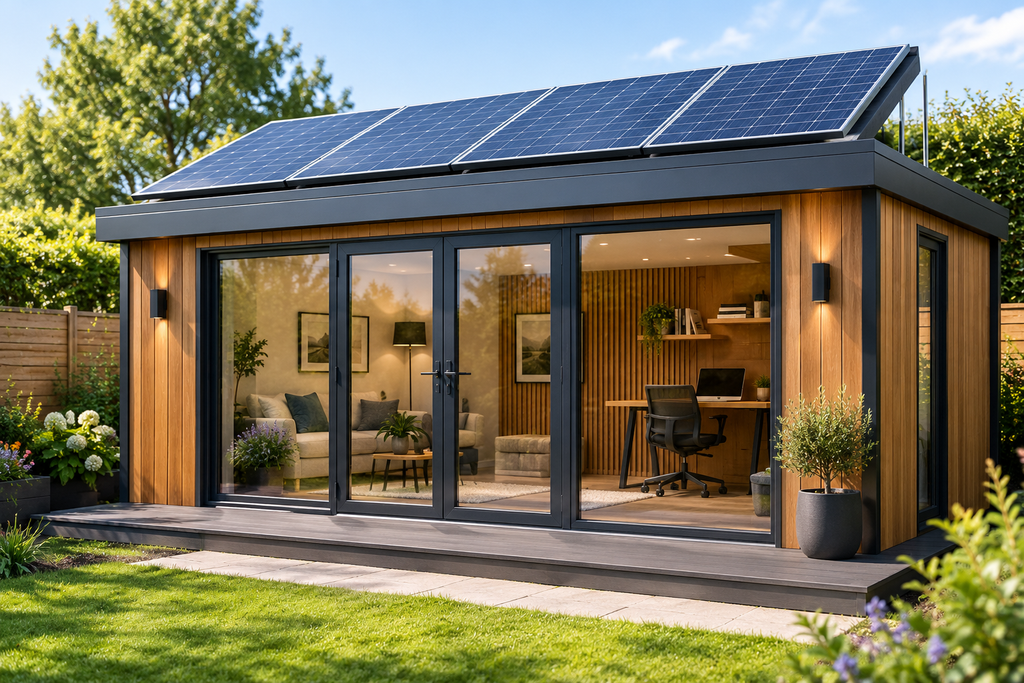
The key is planning ahead. Retrofitting panels onto a roof that wasn’t designed for the extra weight can be costly or impossible, so it’s far better to decide before the build starts.
How Much Power Does a Garden Room Need?
Your electricity needs depend on how you use the space. A typical garden office running a laptop, monitor, LED lighting and a small heater has very different demands from a garden gym or a room with a kitchenette.
As a rough guide:
- Light use (laptop, lighting, charging): around 1–2 kWh per day
- Home office with electric heating in winter: around 4–8 kWh per day
- Garden room with kitchenette, toilet and appliances: often higher still
A standard modern solar panel produces roughly 400 watts. In the UK, each kilowatt of installed solar typically generates somewhere around 850–950 kWh per year, with most output in spring and summer. A small system of four to six panels can make a meaningful dent in the electricity a garden office uses, especially during daylight working hours.
Roof-Mounted vs Ground-Mounted Solar Panels
There are two main ways to power a garden room with solar:
Roof-mounted panels sit directly on the garden room roof. They’re tidy, use no extra garden space and keep cable runs short. The limitation is roof size. A compact room may only fit a few panels, and the roof must be strong enough to carry them.
Ground-mounted panels are installed on a frame elsewhere in the garden, often at an ideal angle and orientation. They suit rooms with shaded or awkward roofs, but they take up garden space and are subject to stricter planning limits.
For most garden rooms, roof-mounted is the simpler and more popular choice, particularly when the roof is designed with solar in mind.
Do You Need a Battery? Going Off Grid
Solar panels only generate power when the sun is out, which doesn’t always match when you’re using the room. A battery stores surplus energy for evenings and dull days.
An off grid garden room relies entirely on solar and battery storage with no mains connection. It’s achievable, but it needs careful sizing. To cope with short UK winter days, you’ll need a larger battery and more panels, and you may still want a backup source.
Most customers are better served by a grid-connected system with optional battery storage. The room draws from the panels first, uses the mains when needed and, with the right certified installation, may be able to export surplus power and earn payments through a Smart Export Guarantee tariff.
Planning Permission and Regulations
Solar panels on outbuildings are often permitted development, meaning you don’t need full planning permission. There are exceptions, though. Restrictions can apply if you live in a conservation area, a listed property’s grounds or a flat, and ground-mounted arrays have size and position limits.
Electrical work also matters. Connecting solar to a garden room must comply with Building Regulations and electrical safety standards, and to claim export payments, installation should be carried out by an MCS-certified installer. Always check with your local planning authority before you start, as rules can vary.
How Much Does Solar for a Garden Room Cost?
Costs vary with system size, roof access, battery choice and installer, so treat these as ballpark figures:
- Small roof system (3–4 panels): roughly £1,500–£3,000 installed
- Mid-size system (5–6 panels): roughly £2,500–£4,500 installed
- Adding battery storage: typically adds £2,000–£4,000 or more
Payback depends on how much of the electricity you use yourself. A garden office used all day, five days a week, makes better use of daytime generation than a room used only at weekends. Getting two or three quotes from MCS-certified installers is always wise.
How to Design a Solar-Ready Garden Room
Building a garden room “solar-ready” costs little at the construction stage and saves a lot later. Here’s what to plan for:
- Roof structure: specify rafters and decking that can carry panel weight and wind loading.
- Roof pitch and orientation: position the room so the main roof face points south where possible.
- Cable routes: include ducting for solar and battery cabling so nothing is chased in later.
- Consumer unit capacity: make sure the electrical supply has room for an inverter and any battery.
- Space for equipment: allow a small, ventilated spot for the inverter and battery.
- Insulation and glazing: the best way to reduce demand is a well-insulated room, because a warm, efficient room needs far fewer panels.
If you’re also considering extras such as a bathroom or kitchenette, read our guide to a garden room with toilet and kitchenette so you can size the electrical load correctly from the start.
Solar Powered Garden Offices in Sheffield
Sheffield’s weather isn’t a barrier. While the UK’s northern cities get fewer sunshine hours than the south coast, solar panels still generate power in diffuse daylight, and a garden office used during the day lines up well with peak generation. Hillside gardens and tall trees are common here, so a shading check before the build is especially valuable.
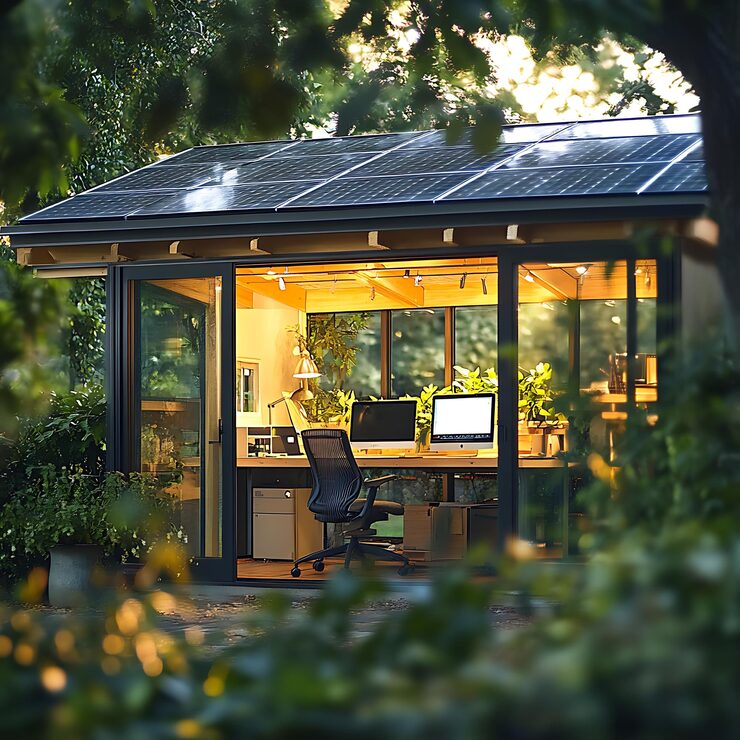
If you’re planning a garden office in Sheffield, we can design the roof, orientation and electrics to suit solar from the outset. You can also explore our full range of garden rooms in Sheffield to see what’s possible.
Frequently Asked Questions
1. Can a garden room run entirely on solar power?
It can, but only with a carefully sized battery and panel array, and winter performance needs particular attention. Many owners prefer a grid-connected system with solar covering most daytime use.
2. How many solar panels does a garden office need?
For light use, two to four panels may be enough. A room with electric heating or several appliances may need five or six or more, depending on roof space.
3. Do I need planning permission for solar panels on a garden room?
Often not, as many installations count as permitted development. Conservation areas, listed buildings and ground-mounted systems can be different, so check with your local authority.
4. Is it cheaper to add solar when building the garden room?
Generally yes. Planning the roof structure, cabling and electrics at build stage avoids rework later.
Ready to Plan a Solar-Ready Garden Room?
A little planning now can give you a greener, cheaper-to-run garden room for years. If you’re thinking about a solar powered garden office or a fully bespoke build, the MCF Garden Rooms team in Sheffield would be happy to talk it through. Get in touch for a free consultation, or see what our customers say on our Google Business Profile